Work / Industrial Design / Shipped to production
Sensory Box
A 3D-modeled electronics enclosure that went into full production: a small router and smart-lights hub living inside one quiet object, with the company logo doing double duty as the illuminated power button.
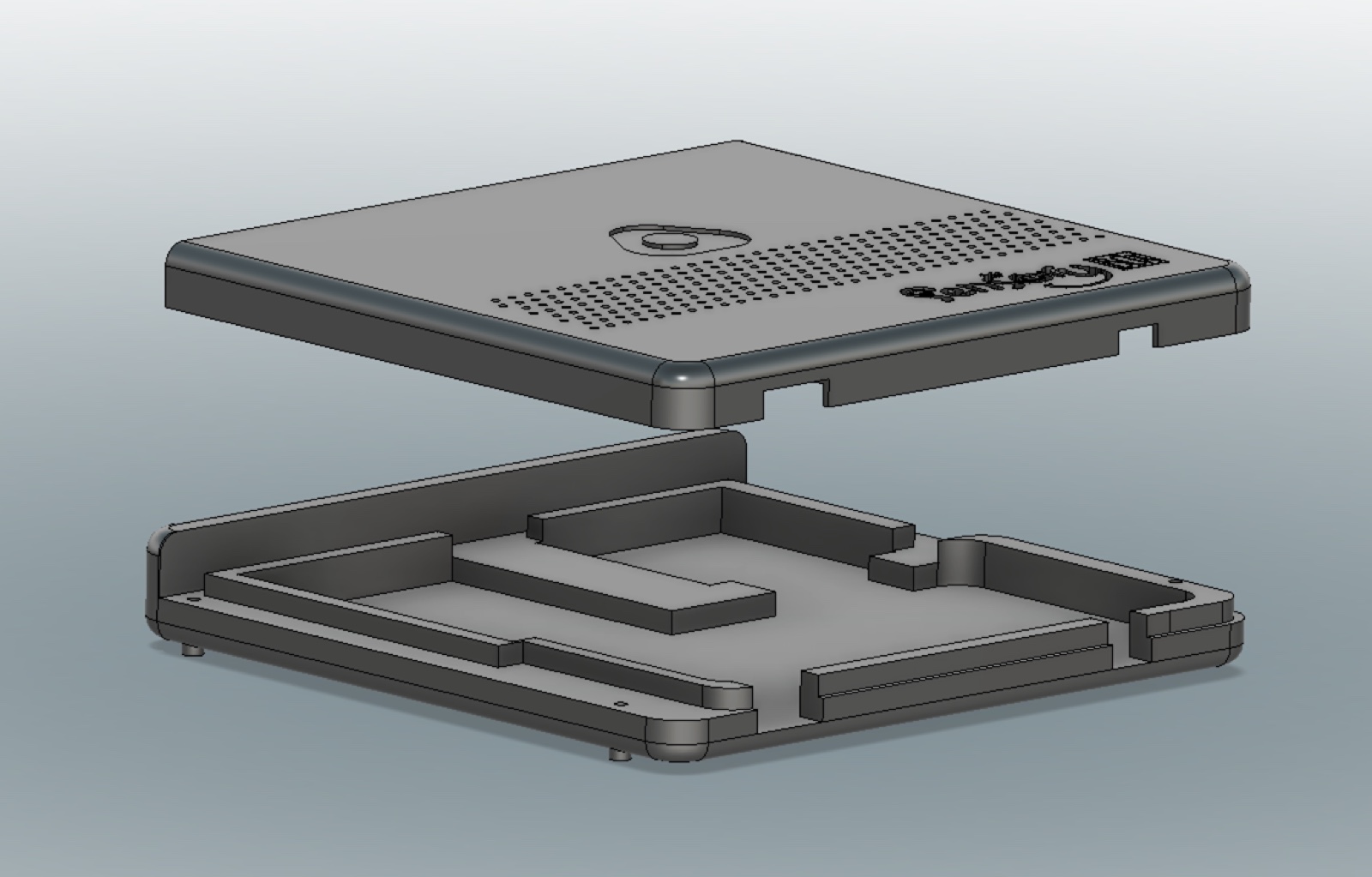
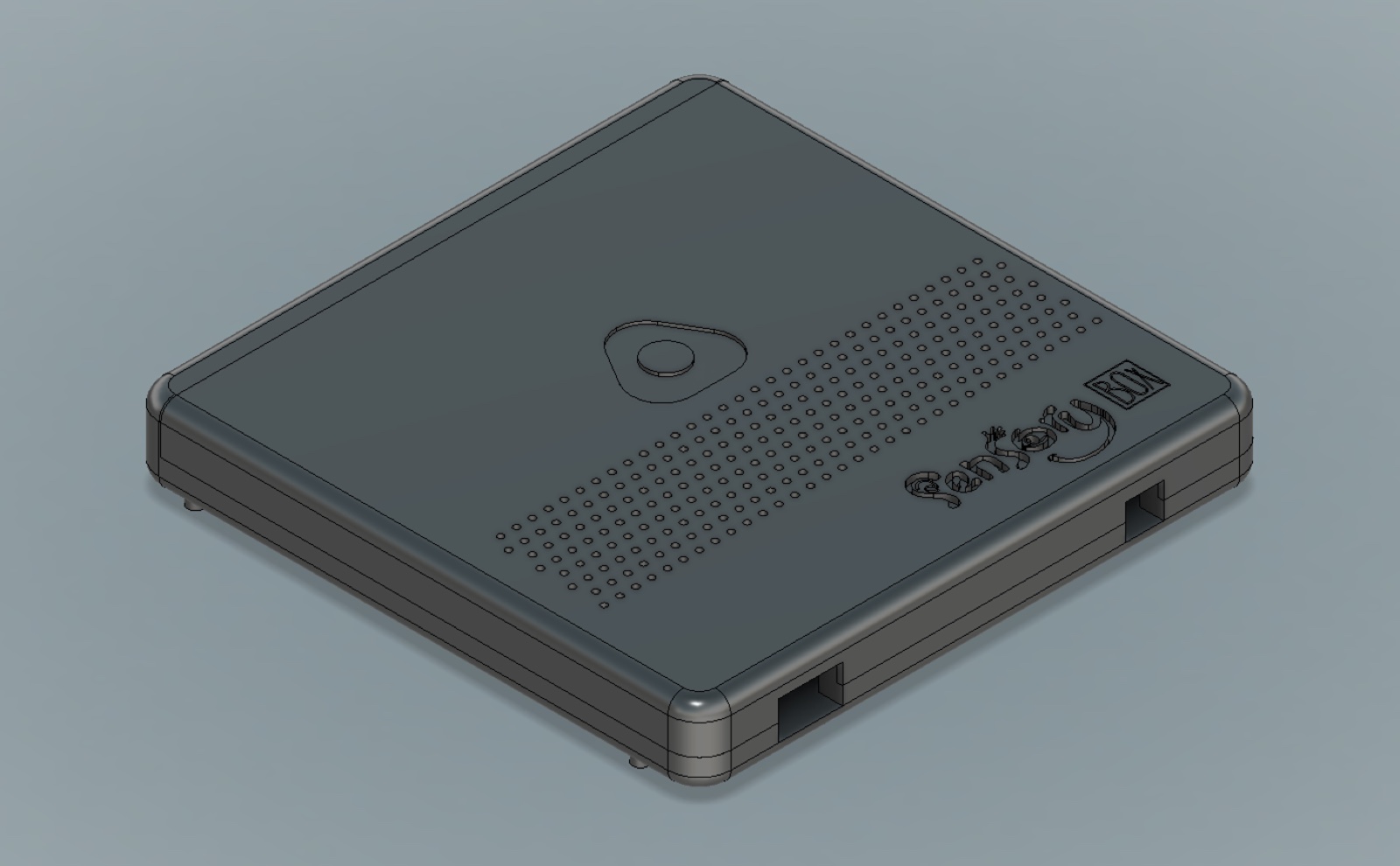
Two devices, one object, zero fuss
Home-tech hardware multiplies: a router here, a hub there, cables everywhere. The brief was an enclosure to contain a small router and a smart-lights hub as a single product, presentable enough for a shelf, practical enough for production.
The logo is the button
Two decisions carried the design. First, the company logo sits in the middle of the box, and I designed it as the on/off button with background light, making the brand mark the single point of interaction. Second, the housing is ventilation-ready, so the stacked devices don’t heat up inside their shared shell.
- One interaction: press the glowing logo; everything else is invisible.
- Thermal honesty: airflow designed in from the first sketch, not drilled in later.
- Production reality: every wall, boss, and tolerance modeled for manufacturing.
Usability and simplicity were addressed in the whole design process. Then the factory said yes.from prototype to production
Shipped, for real
The design was accomplished through a set of brainstorming sessions and usability testing, and the result went on full production. For a designer, there is no better usability test than thousands of units leaving a factory and quietly working on people’s shelves.